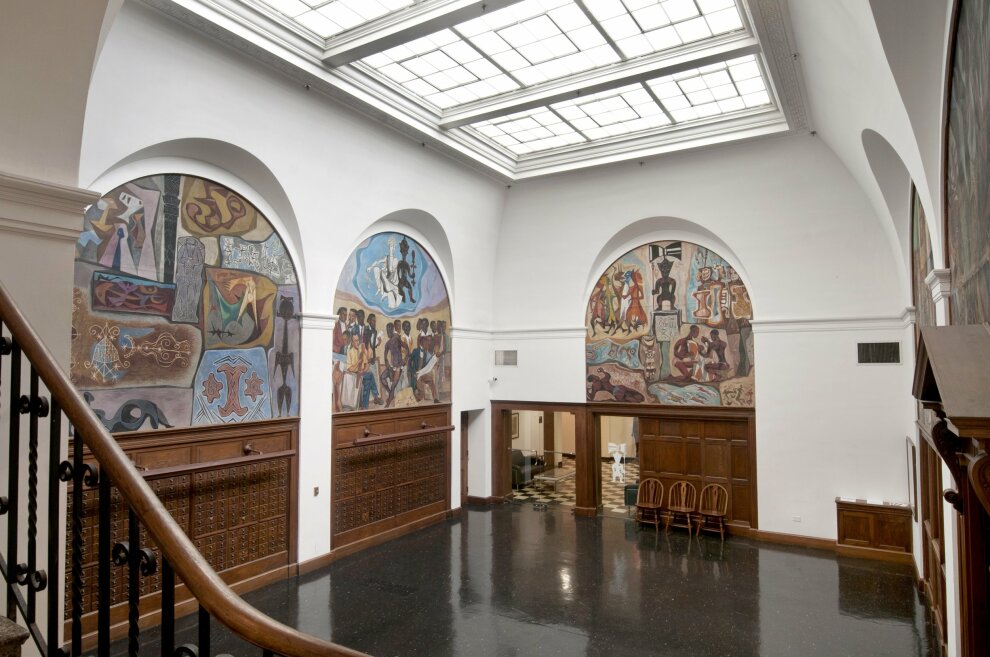
The Art of the Negro mural series, created by Hale Aspacio Woodruff between 1950 and 1951, features six monumental 12-by-12-foot oil-on-canvas panels housed in the atrium of Trevor Arnett Hall. Woodruff, founder of the Atlanta University art department and permanent collection, sought to offer a global narrative of African cultural history in the Americas through a symbolic and interpretive visual language. He viewed African artists as ancestral figures and hoped the murals would inspire greater awareness and pride in African heritage, particularly among young African Americans. The murals were painted in his New York studio after he had joined the faculty at NYU, and Woodruff considered them the finest of all his mural works.
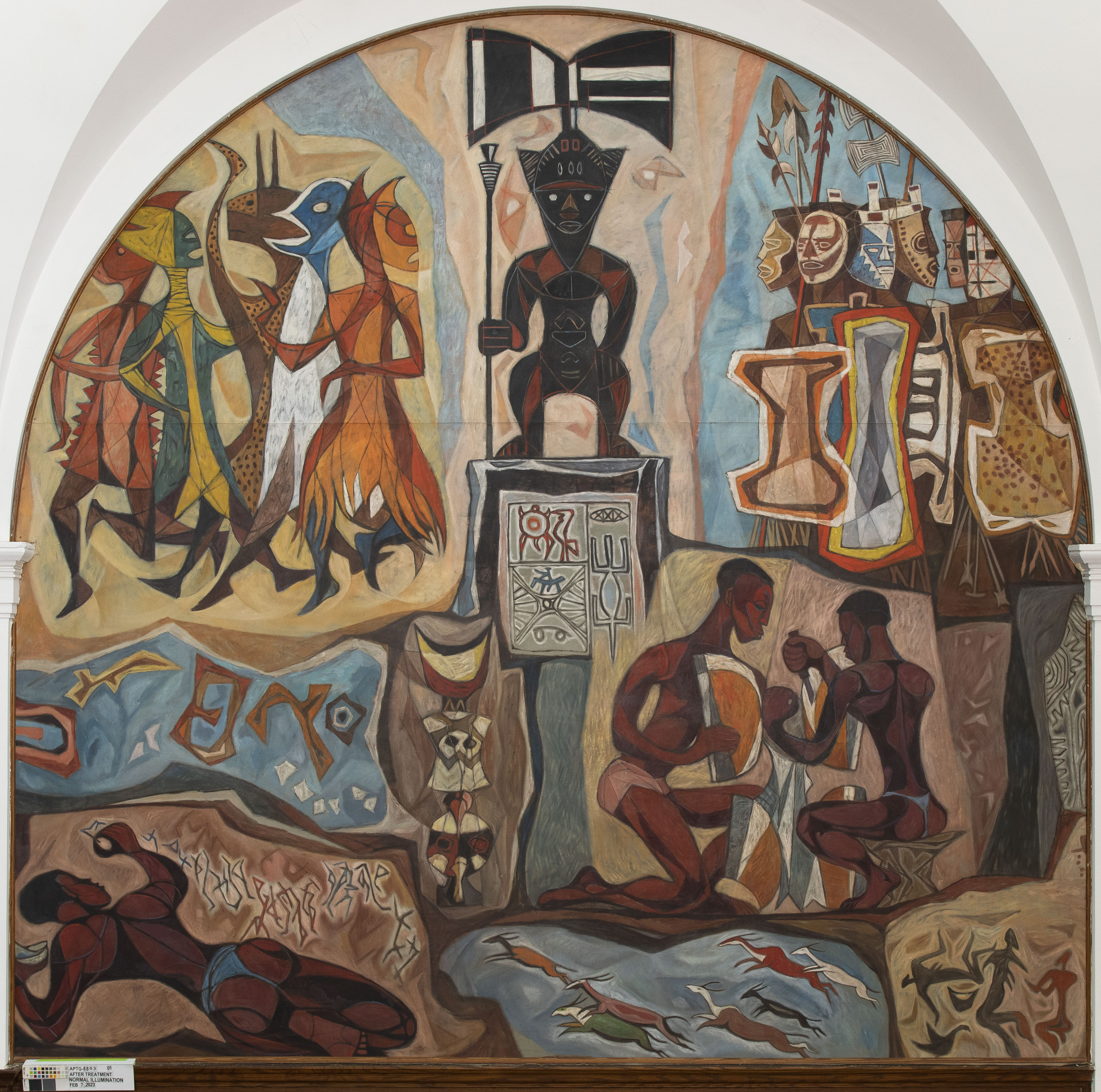
Hale A. Woodruff (1900–1980)
Native Forms illustrates the origin of the African diaspora and foretells the impact that African art and culture will have on Western civilization...
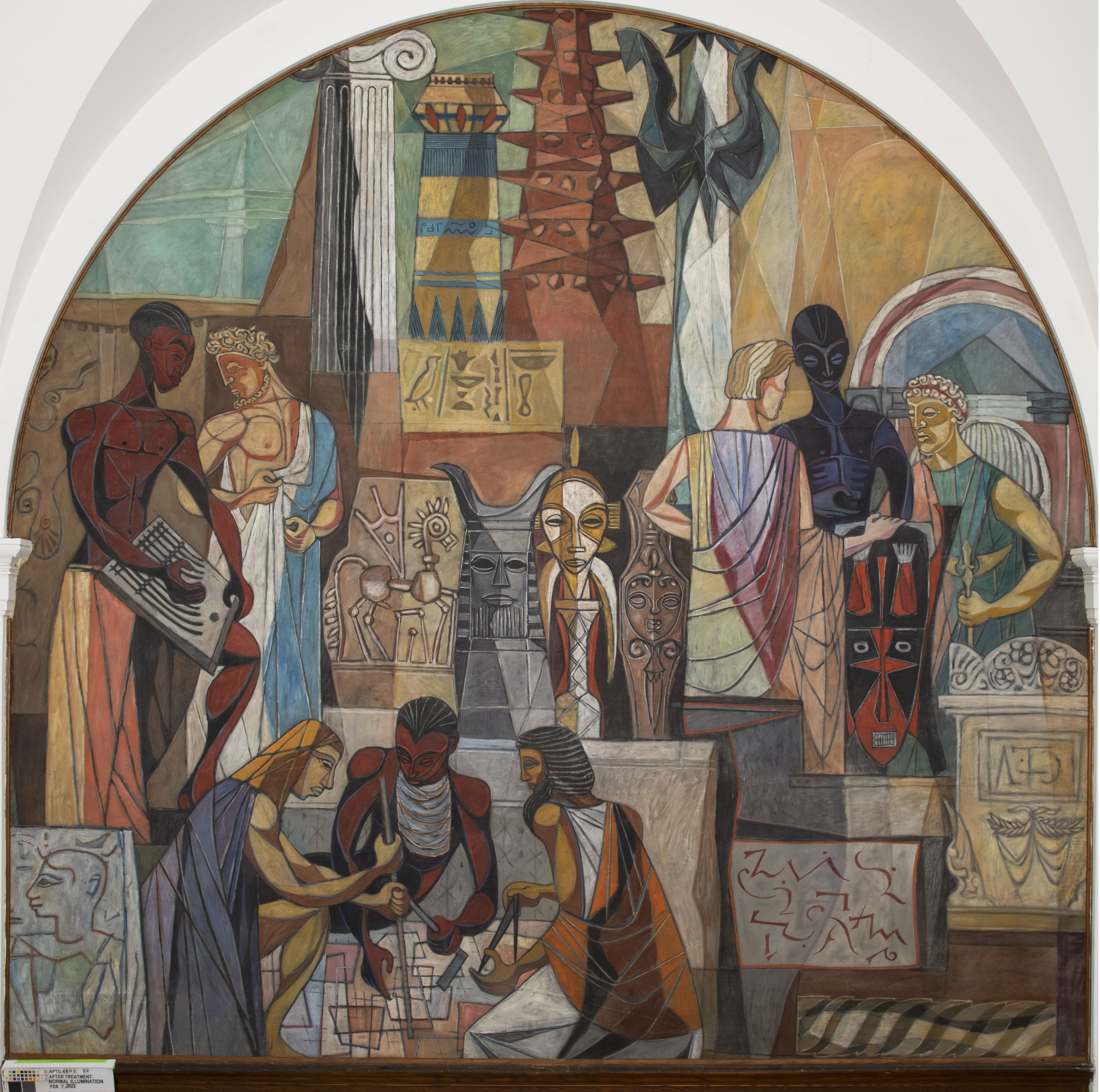
Hale A. Woodruff (1900–1980)
Interchange refers to the ongoing cultural exchange among Africans and Europeans, and the subsequent influences that shaped Western civilization. The architectural forms from Rome, Egypt, North Africa, and Scandinavia refer to the cultures.
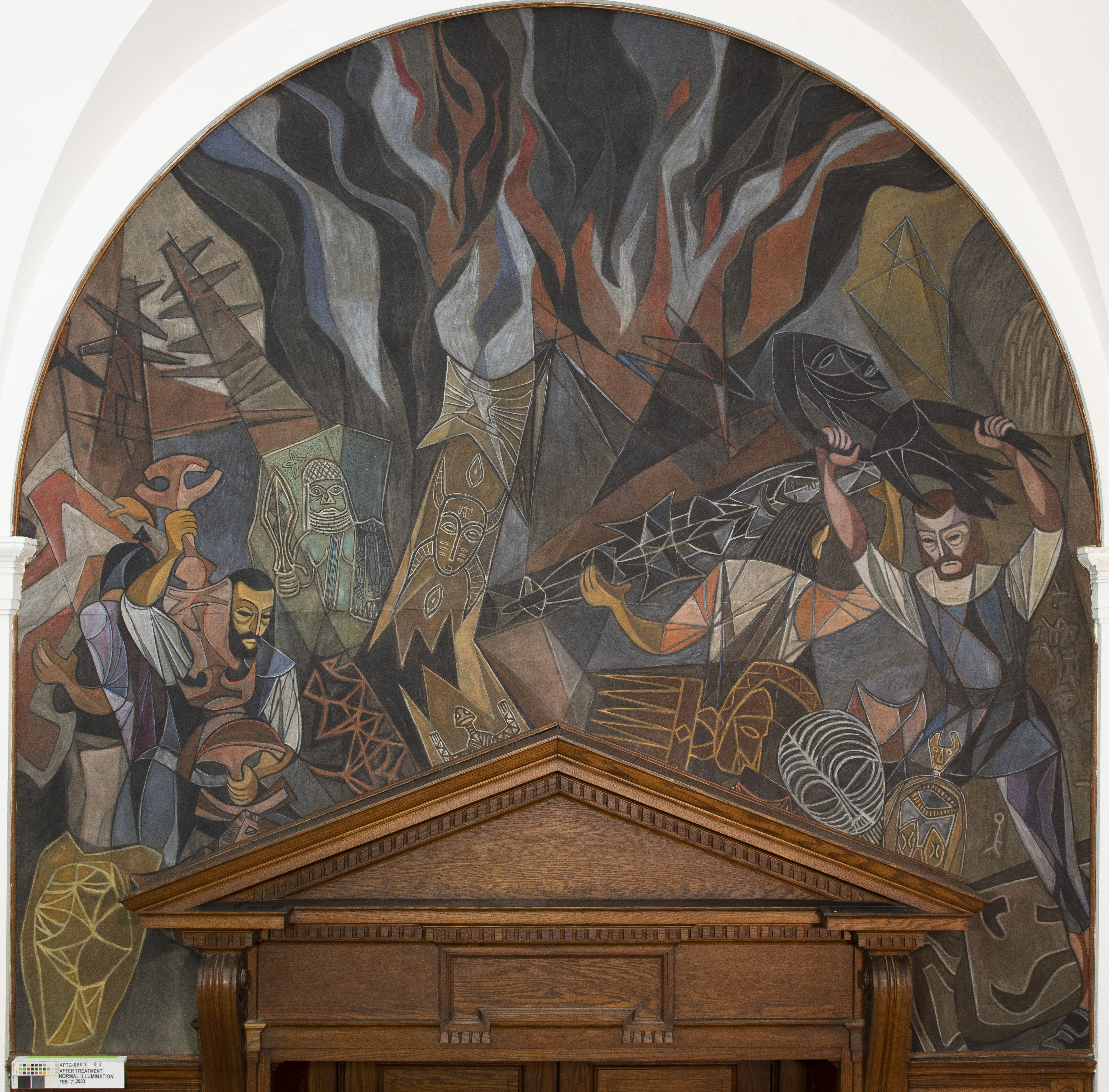
Hale A. Woodruff (1900–1980)
Dissipation dramatizes the colonization and subjugation of Africa by European cultures with specific reference to the British militia that burned Benin to the ground in 1897 and the looting of all its art, still being contested by Nigerian authorities today.
Hale A. Woodruff (1900–1980)
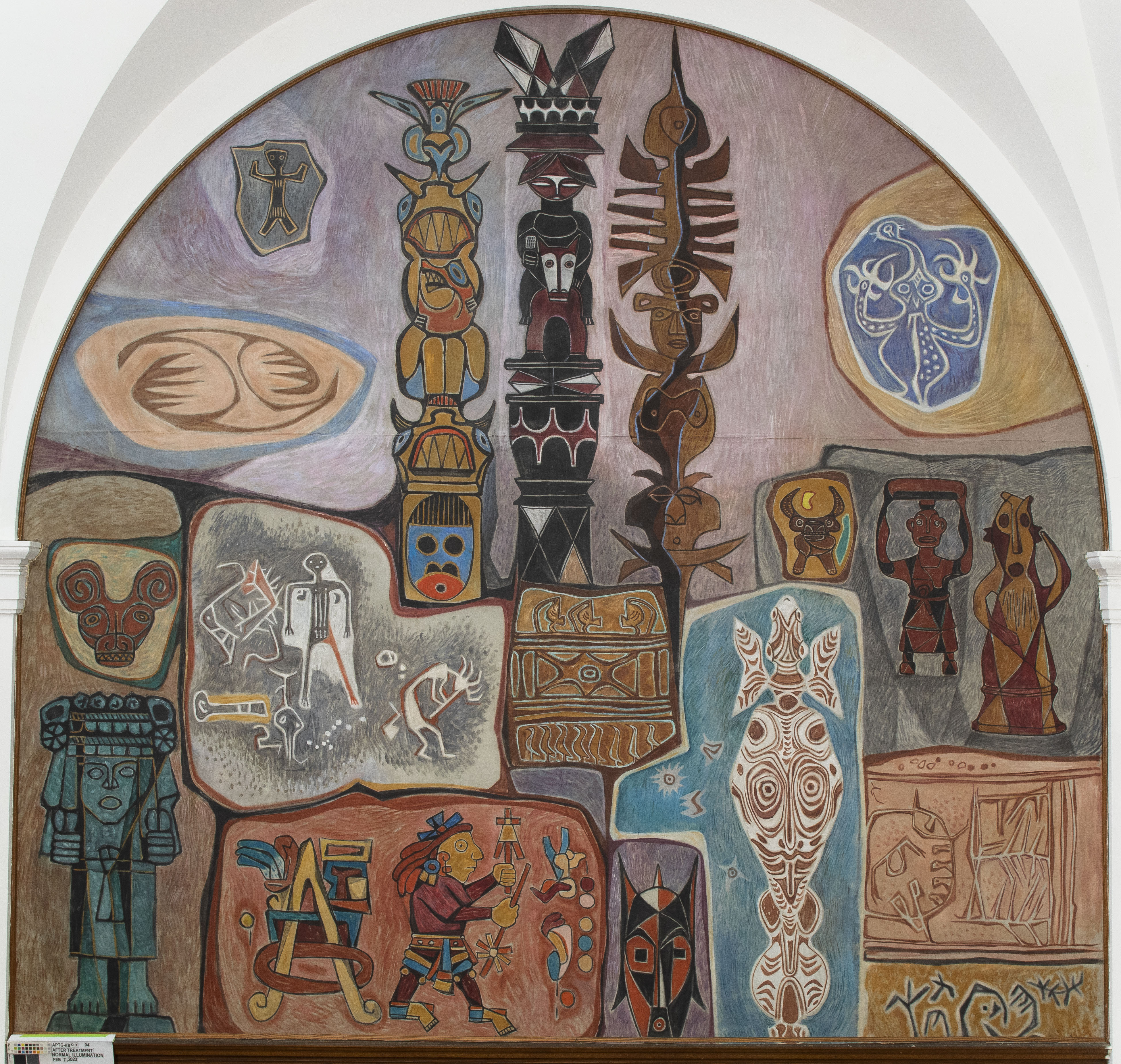
Parallels illustrates the relationships and commonalities among the ancient and traditional art forms of non-European cultures (i.e., Mayans, Aztecs, African, New Guinea, and North American Indians). Located in the light gray area is the Pueblo hunchback flutist and fertility symbol, Kokopelli, which has become a popular icon of native American culture.
Hale A. Woodruff (1900–1980)
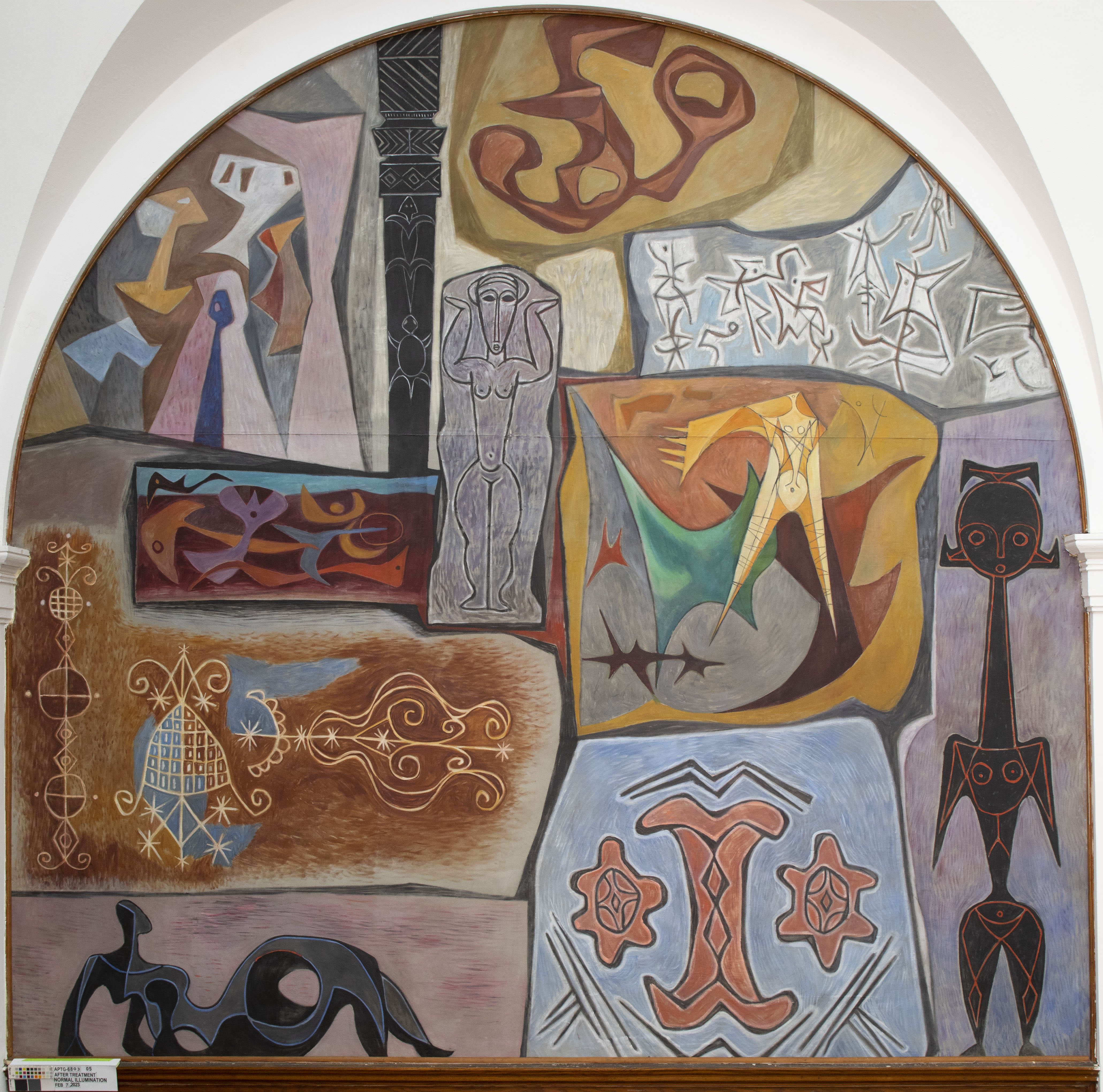
Influences conveys the impact of traditional art forms (assigning African art the central role) in the development of 20th century Western art. Apparent are the stylized works of European masters such as Henry Moore, Modigliani, Kandinsky, Picasso, and Miro. Adjoining these references is a Haitian Veve painting located above Moore's reclining nude.
Hale A. Woodruff (1900–1980)
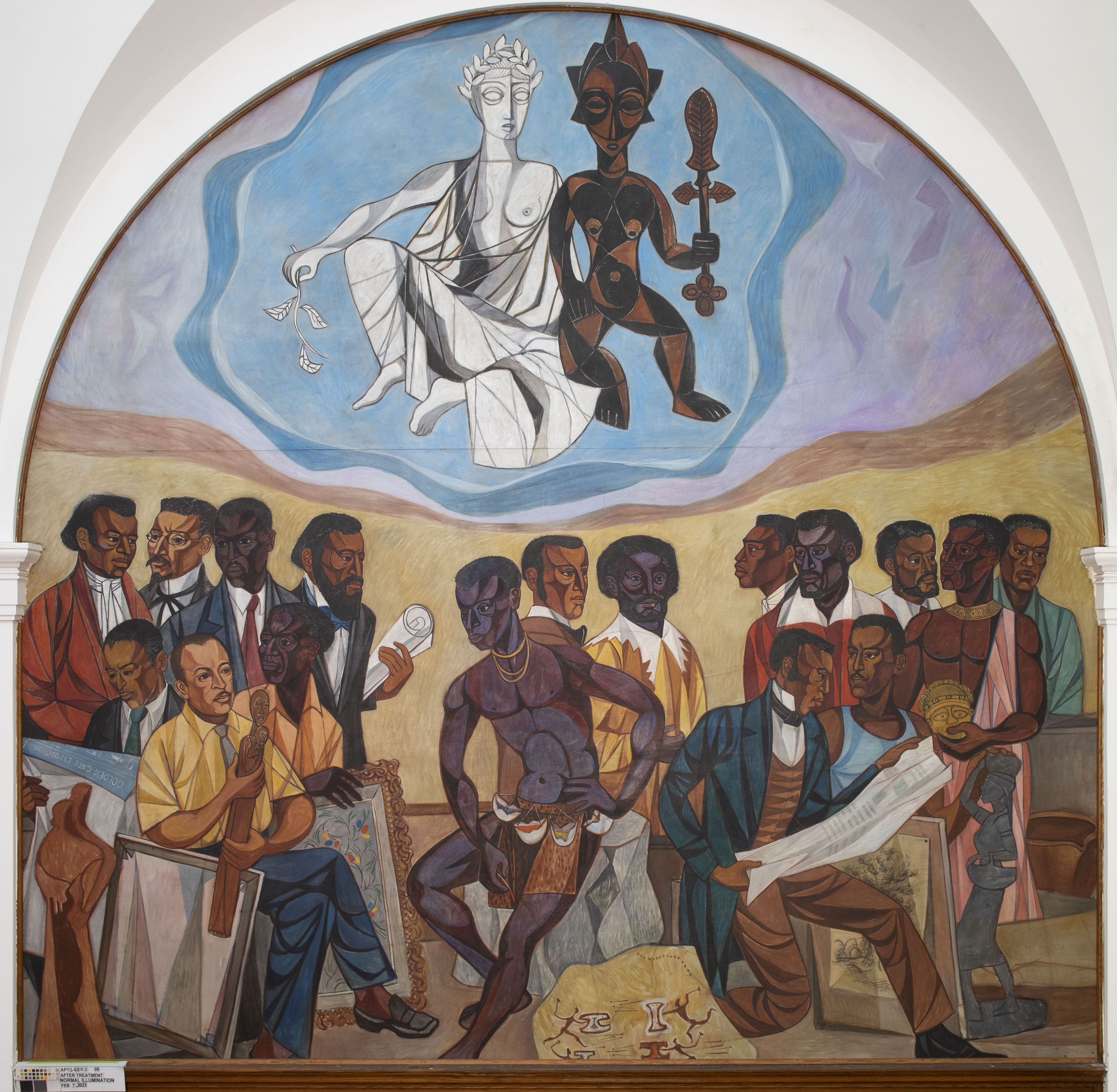
The Muses symbolize the involuntary marriage of African and European cultures and the evolution of the African artist in the Western hemisphere. Seventeen legendary black artists characterize Woodruff's notions of a cultural amalgamation including Iqueigha, 13th Century sculptor, Joshua Johnston, a colonial portraitist and a host of 19th and 20th Century artists, such as Henry O. Tanner, Edward M. Bannister, Jacob Lawrence, Richmond Barthe, and Charles Alston.
Play Game!